In late 2024, I received a collection of information, documents, and original photographs taken by my grandfather, Noel Reid Cameron.
Noel passed away in 1994, when I was five years old. I have only a handful of memories of our time together, and, as you might expect, they have blurred with the passing of time. I am fairly certain that “Poppa No,” as I called him, bought me a pink love-heart Care Bear. I also faintly recall a visit to the old Toy Warehouse on the Petone foreshore. On one occasion, when we were running late getting me home, he warned that we’d better get a move on or we’d be “in trouble on a bubble.”
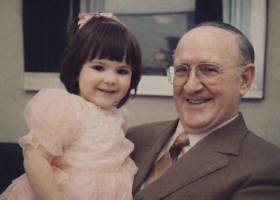
I do remember that when Poppa No became unwell, he began to experience flashbacks to the war. He would warn us to tuck our hair down the backs of our shirts, so the Germans wouldn’t cut it off and turn it into rope.
After Pop passed away, I remember being shown a photograph of him standing on a pyramid while I was studying Egypt at primary school. I thought it was a fascinating image, but it didn’t fit with my understanding of war. Again, he was standing on a pyramid. People at war surely didn’t have time to explore? Over time, however, my interest in history grew, and with it, my curiosity about his life and experiences.
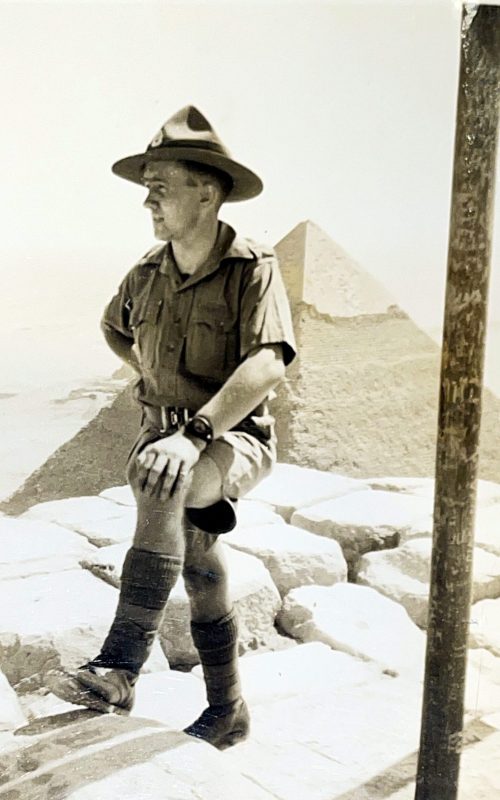
As I explored his collection, I realised that these photographs and the stories behind them may be of interest to a wider audience. They not only offer a glimpse into my grandfather’s experiences but also provide a unique perspective on New Zealand’s involvement in the war through one of its soldiers, and what he found of interest in the desert landscape.
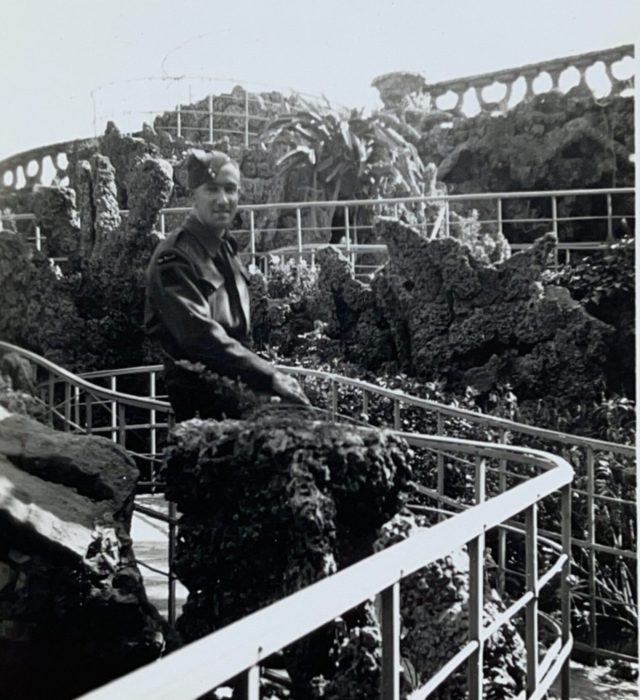
One of the first things I noticed about the photographs is that they don’t reflect the harsh realities of war. Instead, they highlight the curiosity and explorations of a young man immersed in a vastly different world then 1940s New Zealand. Apart from the presence of the occasional military uniform or a hospital, the images could easily be mistaken for snapshots of a traveler experiencing the Middle East in the mid-20th century. Yet, we now understand the heavy toll that service took on those who represented New Zealand in World War Two and the lasting impact such experiences had on their lives, regardless of the tone of these photographs.
Rather than donating the collection to the New Zealand Defence Force or War Museum, who are likely overwhelmed with such donations, I decided to create this website to make the material more accessible to anyone with an interest in this period of history. The name ‘Project Maadi’ comes from the camp where Noel Cameron was based during World War Two before his injuries, located in Maadi, now a suburb of Cairo, Egypt.
On this website, I share Noel’s photographs alongside the information I’ve uncovered about his wartime service and the activities of the Second New Zealand Expeditionary Force. My goal is to preserve and share these materials in a way that informs and engages those who want to learn more about this chapter in history.
This website was not created to glorify war. Instead, it aims to honour the memories of those who contributed to the freedoms we enjoy today, including Noel. It also seeks to ensure that the moments he captured on film and carefully transported across the world are preserved and not forgotten.
Noel’s experience and contribution to the war were not exceptional; he was an ordinary New Zealander who, like so many others, embarked on a journey dictated by the demands of the time. As a conscript, he went to war not by choice but with a mix of apprehension and a sense of adventure. Unlike the soldiers of World War One, the men of the Second New Zealand Expeditionary Force likely understood the dangers that awaited them in foreign lands, having seen their fathers and uncles participate in World War One.
The photographs Noel captured date from December 1941 to June 1943, concluding when he was evacuated from the Middle East aboard the MS Oranje. This website features over 100 of his photographs, along with other artefacts that offer a glimpse into his time in the Middle East.
Captured in two albums, Noel (and later, his wife Dorothy) meticulously documented the content of the photographs, helping me to annotate most pictures on this website. This also helped me identify some, but sadly not all, of the other soldiers captured in the images.
To learn more about Noel’s life and service, you can follow the link in the menu above. Additionally, you can use the toolbar to explore the history of the Second New Zealand Expeditionary Force and its role in World War Two.
Where possible, I have sought to supplement Noel’s photographs with information on what is presented, and the locations and sites that he experienced, to the best of my knowledge. This information has been collated from the document supplied to me, along with general research. Where possible, I include references on each relevant section of the website, as well as in the ‘references’ section linked above. I have also included information on the materials used to create this website here.
I have sought to ensure accuracy of information presented but acknowledge that some errors or omissions may exist. Over time, I will try and add more information as time allows.